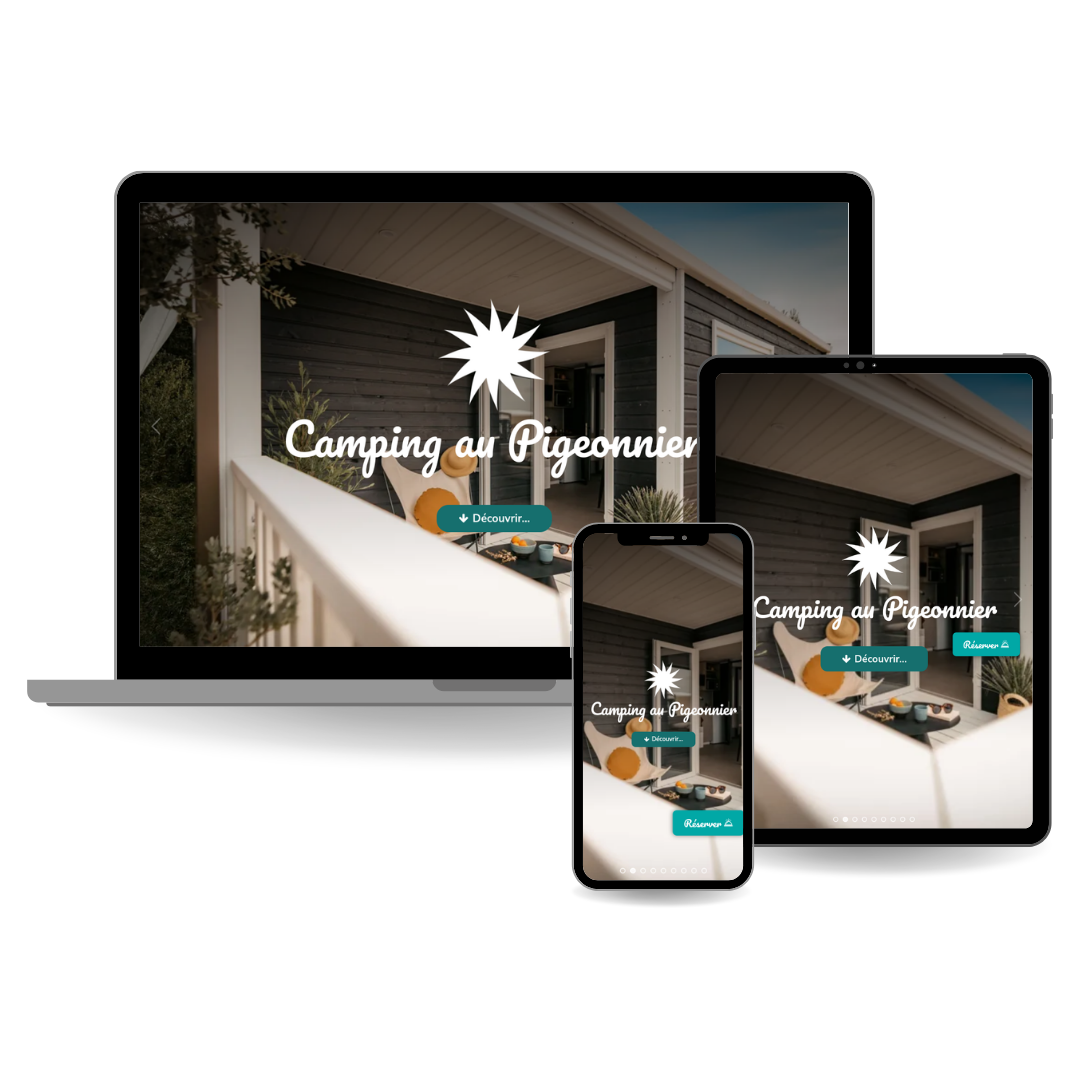
Campground website: today, a campground can no longer rely solely on its offline presence. Before booking, vacationers go online to discover the place, compare amenities, and decide whether the overall atmosphere matches what they are looking for. For a campground, a website therefore plays a key role: it must reassure visitors, spark interest, and help them picture their future stay. The Camping Au Pigeonnier website is a strong example, as it highlights the vacation experience, essential services, and the family-friendly spirit of the property.
Camping Au Pigeonnier logo
Why Has a Campground Website Become Essential?
Today’s visitors want to find information quickly. They want to see photos, understand what is offered, identify available services, and access booking options easily. They also browse very often from their phones, which makes a clear and well-structured website even more important. For a campground, having an attractive, well-designed website has become a powerful way to capture attention, build trust, and guide visitors toward booking.
It is also a true sales tool. A good website presents the offer clearly, answers the most common questions, and makes the booking process easier. The clearer the information, the easier it is for visitors to move forward with confidence.
A Website That Should Inspire Guests Before They Even Arrive
However, in the travel and vacation industry, providing information is not enough: visuals play a major role. Visitors are not just looking for accommodation. They are also looking for a setting, an atmosphere, and an experience. A website therefore has a very specific purpose: it must help visitors imagine themselves there, feel the atmosphere of the place, and picture their stay before they even arrive.
This is exactly what Camping Au Pigeonnier achieves. Its website showcases a 4-star campground in Le Château-d’Oléron, close to the town center, with air-conditioned accommodations and a heated indoor pool. When visitors discover these features, they are not simply reading information: they are already beginning to picture their future campground vacation.
What Should Be Highlighted First on a Campground Website?
On a campground website, visitors want to get straight to the essentials. That means highlighting accommodations, facilities, services, the surrounding area, and useful access information right from the start. On the Camping Au Pigeonnier website, this structure works well because visitors can quickly identify the key information and easily understand what the campground has to offer.
Why Are Visuals So Important?
In the vacation industry, visuals are decisive. Before reading the details, users look at the photos, the overall feel of the website, and the way the property is presented. On the Camping Au Pigeonnier website, the visuals help showcase the setting, the accommodations, and the campground’s family-friendly atmosphere, immediately helping visitors picture themselves there.
Why Does Online Booking Change Everything?
When visitors quickly find what they are looking for, they need to be able to take action without friction. This is where online booking becomes essential: it naturally extends the interest created by the website. In the case of Camping Au Pigeonnier, the user journey is designed so visitors can discover the property, access practical information, and book more easily, without any disruption in the experience.
Why Trust Sowebio With Your Project?
Creating a website for a campground is not just about putting text and photos online. It requires presenting the property in its best light, creating desire without overdoing it, and building a simple, intuitive website for visitors who do not want to waste time.
This is exactly what Sowebio focuses on in its projects: tailored support, a website designed to accurately reflect the client’s image, and long-term guidance to help content and online visibility evolve over time.
In other words, Sowebio handles the technical, visual, and strategic aspects so the campground can focus on its core business.
FAQ About Your Campground Website
If I Already Use a Booking Platform Like Booking.com, Is a Website Still Useful?
Yes, absolutely. A platform like Booking.com allows guests to make reservations, but it does not replace a real website. A campground website allows you to present your identity, showcase your accommodations, highlight your services, and communicate the atmosphere of your property. It also helps strengthen your brand image and prevents you from relying solely on an external platform.
What Can Sowebio Bring to a Campground?
Sowebio supports campgrounds in creating a clear, attractive, and easy-to-browse website. The goal is to showcase the property, inspire visitors, and make essential information quickly accessible. The agency also handles the visual direction, website structure, and overall consistency with the campground’s image.
Why Not Rely Only on Social Media?
Social media is useful for communication, but it does not replace a website. A website centralizes important information, reassures visitors, and provides a more complete space to discover the campground. It is also a more stable platform that you fully control.
Can a Website Really Help Generate More Bookings?
Yes, because it makes the decision easier. When visitors quickly find the right information, visualize the campground, and understand what makes it different, they are more likely to book. A good website is therefore not only used to inform; it also helps turn interest into action.
Can Sowebio Help a Website Evolve Over Time?
Yes, and that is actually important. A website should evolve along with the campground’s needs, new photos, services, or content that needs to be highlighted. Sowebio can support this evolution so the website remains up to date, useful, and consistent with the business.